“If we make work faster, engagement will follow.”
At face value, the logic sounds right. AI streamlines work. Automation removes friction. Employees spend less time on tedious tasks and more time on meaningful work. Productivity rises, cognitive overload fades, and mental exhaustion finally lets up.
Except that’s not what most organizations are seeing.
Gallup reports employee engagement reached its lowest in over a decade last year, with only 31% of employees feeling engaged. Motivation has dropped. Boredom in the workplace has increased.
So what explains the gap?
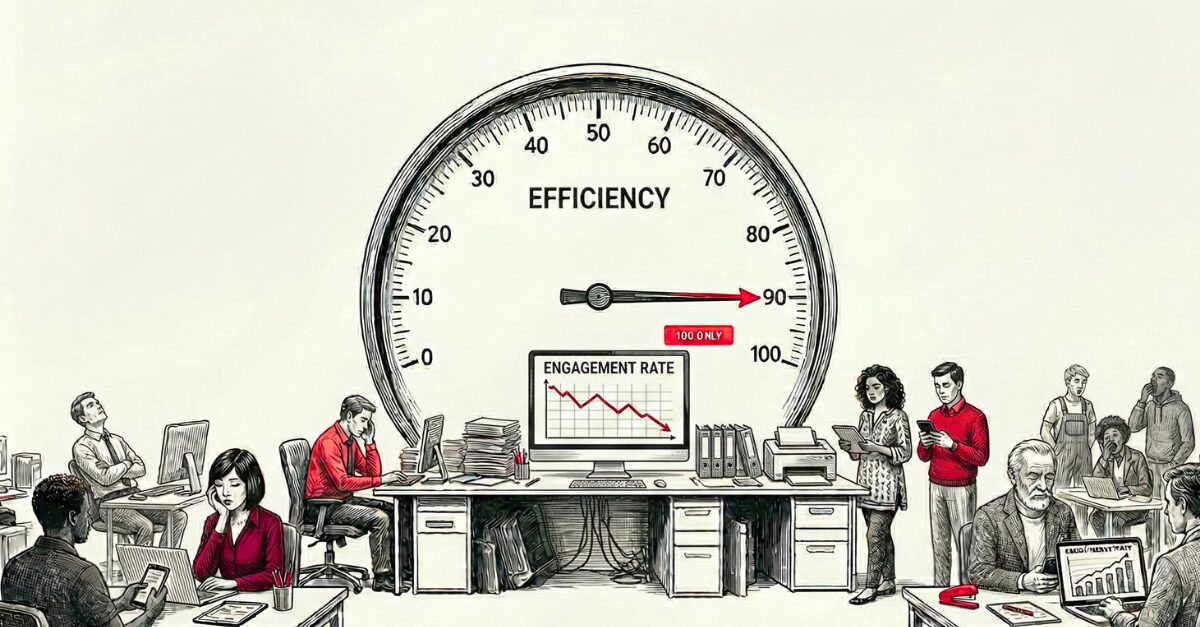
It’s not that employees are unclear about what they need; it’s that leaders keep solving for the wrong problem. They’re chasing productivity gains while employees are losing autonomy, purpose and connection. No amount of streamlined processes will fix engagement if the work itself feels hollow.
Many of today’s workplace challenges aren’t coming from bad intentions. They’re coming from well-intentioned decisions made without understanding how they actually land with employees.
When “helping” is actually hurting
There’s a reason engagement isn’t a “nice-to-have.” Businesses with higher employee engagement see 14% higher productivity and 23% higher profitability.
But when leaders treat engagement as secondary to efficiency, they undercut the very outcomes they’re trying to improve.